logo
Jiangsu Siming Engineering Machinery Co., Ltd.
Products
Products
Home > Products > Slipform Paver > SMC-523 Concrete Curb Forming Machine with Auger Feeding and Adjustable Vibration

SMC-523 Concrete Curb Forming Machine with Auger Feeding and Adjustable Vibration

Product Details

Place of Origin: Jiangsu, China

Brand Name: SIMING

Certification: ISO9001/CE

Model Number: SMC-523

Payment & Shipping Terms

Minimum Order Quantity: 1 unit

Packaging Details: Container shipping

Delivery Time: 20-25 work days

Payment Terms: T/T

Supply Ability: 1 unit a month

Get Best Price
Highlight:

Concrete curb forming machine auger feeding

,

Slipform paver adjustable vibration

,

Concrete curb machine slipform paver

Paving Speed:
0-12 M/min
Operating Weight:
2400 Kg
Productname:
Slipform Paver
Paving Height:
≤500 Mm
Drive Type:
Single Crawler Hydraulic
Travel Speed:
0-30 M/min
Paving Width:
≤1250 Mm
Paving Speed:
0-12 M/min
Operating Weight:
2400 Kg
Productname:
Slipform Paver
Paving Height:
≤500 Mm
Drive Type:
Single Crawler Hydraulic
Travel Speed:
0-30 M/min
Paving Width:
≤1250 Mm
SMC-523 Concrete Curb Forming Machine with Auger Feeding and Adjustable Vibration
Product Overview

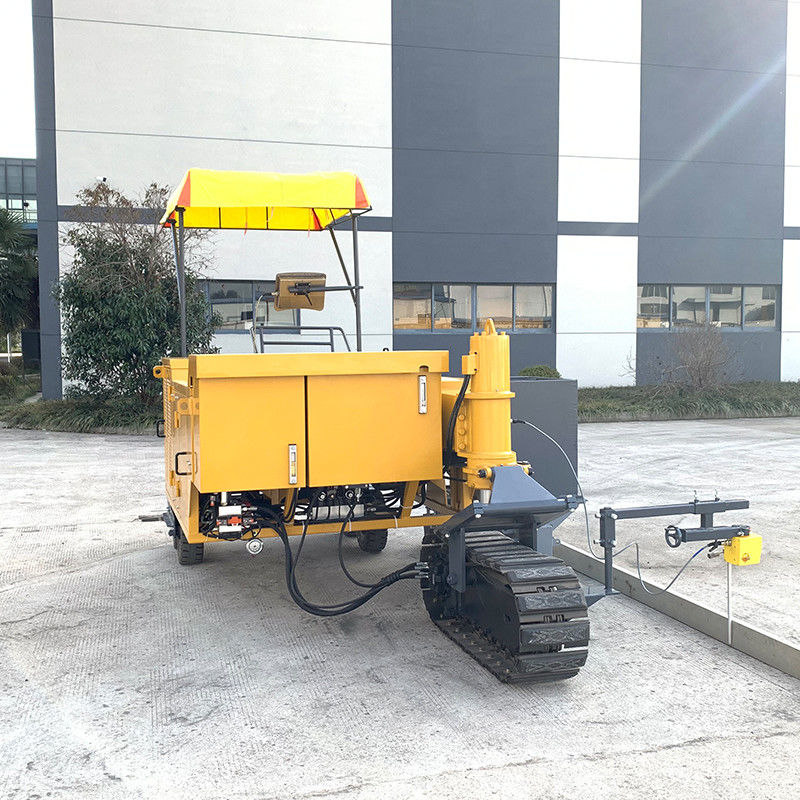
The SMC-523 Curb & Gutter Slipform Paver combines an auger feeding device and a vibration system to support the forming of concrete curbs and compatible gutter profiles. It is designed for projects that need a dedicated mold and a more continuous approach to concrete profile construction.

Concrete feeding and vibration are important parts of slipform paving. If material is not distributed adequately across the forming area, operators may need to stop for manual adjustment or correction. The SMC-523's auger feeding device is designed to improve feeding speed and concrete workability. Its vibrator frequency is listed at 0–167 Hz, with two standard vibrator interface circuits.

The machine also uses a full hydraulic drive system and sensor-based steering, grade and slope control. These features support the overall forming process, but the final result depends on the concrete mix, aggregate size, mold geometry, machine setup and operator practice. For this reason, buyers should provide the target curb or gutter profile and concrete mix information when requesting a technical recommendation.

Product Features
  • Auger feeding device: Helps move and distribute concrete into the forming area.
  • Adjustable vibration frequency: The listed range is 0–167 Hz, allowing the operating setup to be matched to project conditions within the machine's capability.
  • Two standard vibrator circuits: Supports the standard vibrator interface arrangement.
  • Hydraulic travel: Provides machine movement during paving.
  • Automatic steering, grade and slope control: Sensors support alignment and elevation management.
  • LCD display and fault indication: Helps the operator monitor machine status.
  • High-pressure cleaning system: Supports post-operation cleaning and maintenance.
Why Do Feeding and Vibration Matter?

Concrete curb forming requires a mix that can be fed into the mold and consolidated or shaped appropriately for the selected profile. If the mix is too stiff, too wet or inconsistent, the machine may not produce the intended finish without adjustment. Poor material distribution can also cause irregular filling across the mold.

Vibration settings should be appropriate for the mix, mold and construction method. Excessive or insufficient vibration may affect the forming process, so operators should follow the machine setup recommendations and the project's concrete requirements rather than assuming one setting works for every mix.

For contractors, the objective is not simply to increase machine speed. It is to coordinate concrete supply, feeding, vibration and travel so the profile can be formed consistently.

Coordinating Feeding, Vibration and Travel

The SMC-523 uses an auger feeding device to help distribute concrete into the mold. Its vibration system assists the forming process, while hydraulic travel moves the machine along the prepared construction line. Sensor-based steering, grade and slope control supports the required alignment.

To prepare the equipment for a project, the contractor should confirm the curb or gutter dimensions, concrete consistency, aggregate size, required profile and expected production sequence. A suitable trial section can help verify the concrete mix and operating setup before full production begins.

The machine's stated vibration frequency range is 0–167 Hz. Actual settings and the number or arrangement of vibrators should be confirmed against the selected configuration and concrete requirements.

Specifications
Item SMC-523 Specification
Paving width0–1,250 mm
Paving height0–500 mm
Thickness tolerance shown in product data±3 mm per 3 m
Paving speed0–12 m/min
Driving speed0–30 m/min
Standard vibrator interface2 circuits
Vibrator frequency0–167 Hz
Engine option 1Quanjiao QC490G, 35 kW / 2,600 rpm
Engine option 2Yanmar 4TNV88, 30.6 kW / 2,600 rpm
Diesel tank75 L
Hydraulic oil tank95 L
Transportation dimensions3,250 × 1,500 × 1,450 mm
Reference weight2.4 t

The final equipment setup depends on the selected engine, mold and other configuration details. Confirm all requirements before purchase.

Application

The SMC-523 may be considered for:

  • Concrete curb forming with a dedicated mold
  • Concrete gutter and roadside drainage profiles
  • Repeated concrete edge structures along roads
  • Projects where controlled concrete feeding is an important consideration
  • Applications requiring sensor-assisted line, grade and slope control

The suitability of a particular profile depends on the mold and project drawings.

How to Choose a Slipform Paver with an Auger Feeding System
  1. Confirm the concrete mix: Share the slump or consistency, aggregate size and mix design.
  2. Provide the mold profile: Specify width, height, wall thickness and cross-sectional shape.
  3. Discuss vibration requirements: Confirm the intended forming method and required vibrator configuration.
  4. Coordinate concrete supply: Estimate the required supply arrangement to avoid unnecessary interruptions.
  5. Check control needs: Identify whether automatic steering, grade and slope control are required.
  6. Plan cleaning and maintenance: Consider water availability, end-of-shift cleaning and service access.
Frequently Asked Questions
Q1: What does the auger feeding device do?

It helps distribute concrete into the forming area and is designed to improve feeding efficiency and workability.

Q2: What is the listed vibrator frequency range?

The product sheet lists 0–167 Hz and two standard vibrator interface circuits.

Q3: Does a higher vibration frequency always produce a better surface?

No. The suitable setting depends on the concrete mix, mold and construction method. Settings should be confirmed through proper setup and testing.

Q4: Can the machine handle different concrete mixes?

The product information states that it can handle low-slump concrete and concrete with a certain degree of slump. The suitability of a specific mix should be verified for the project.

Q5: How can I get a suitable configuration?

Provide the mold drawing, concrete mix details, required paving dimensions and site conditions so the configuration can be reviewed.

Ask About Your Concrete Mix and Mold

Contact Siming with your curb or gutter drawing and concrete mix information. We can help review the mold requirements and discuss an appropriate SMC-523 setup for your project.