logo
Jiangsu Siming Engineering Machinery Co., Ltd.
About Us
Your Professional & Reliable Partner.
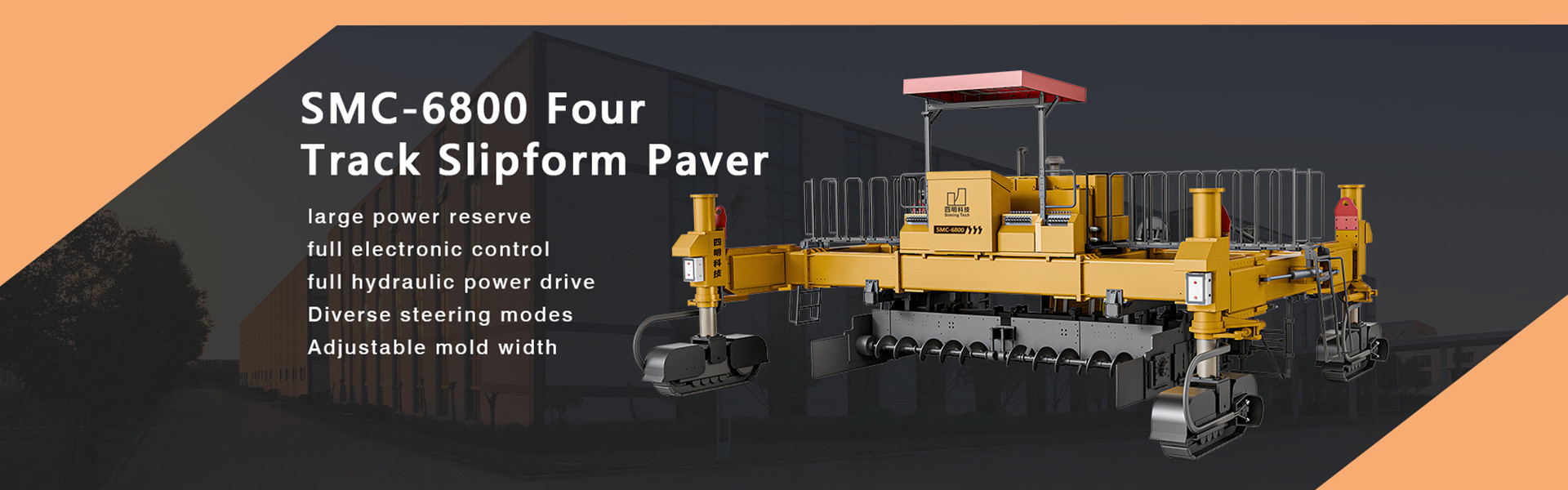
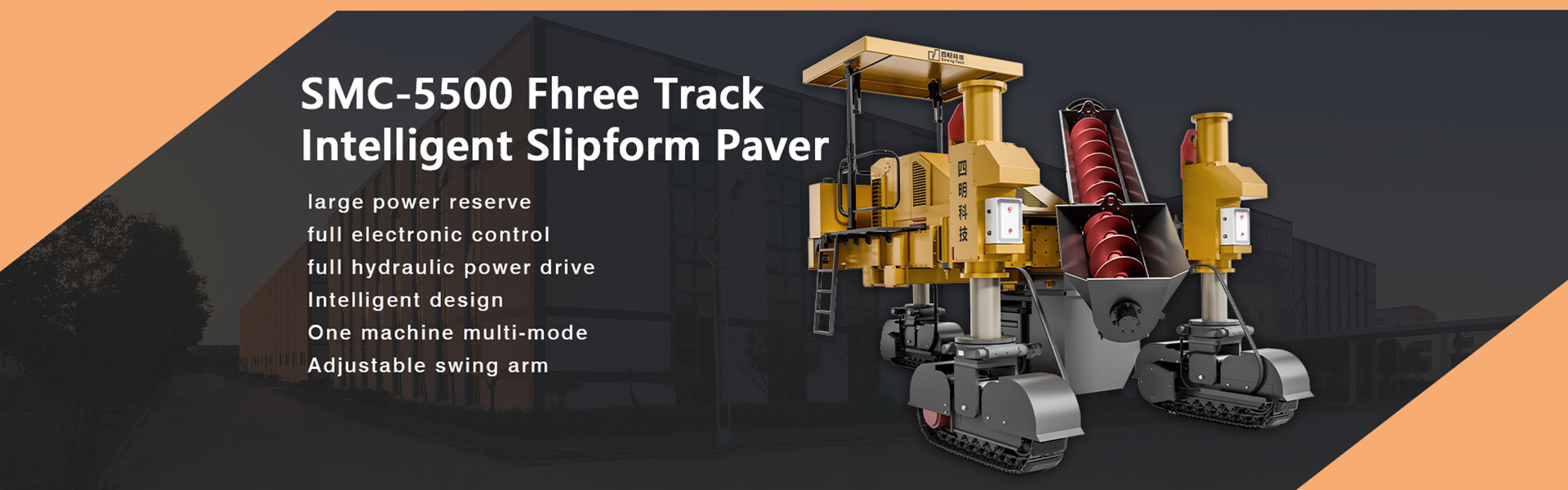
Siming company is the first manufacturer in China for series concrete slip form paver which includes four-crawler type SMC-6600,SMC-6500; three crawler type SMC-5500,SMC-5000; one crawler type SMC523,and extruder SMC450. The slipform pavers are applied to on site pouring many types of concrete structures such as road, sidewalk, curb&gutter, gutter, barrier¶pet etc. Compared with traditional precast method, our machines are featured with high operation speed( max paving speed to 15m/min), high ...
Learn More

0

Year Established

0

Million+
Employees

0

Million+
Customers Served

0

Million+
Annual Sales
China Jiangsu Siming Engineering Machinery Co., Ltd. HIGH QUALITY
company has strictly quality control system and professional test .
China Jiangsu Siming Engineering Machinery Co., Ltd. DEVELOPMENT
Internal professional design team and advanced machinery workshop. We can cooperate to develop the products you need.
China Jiangsu Siming Engineering Machinery Co., Ltd. MANUFACTURING
Over 30 years of industry experience, mature product supporting facilities, and strict process control systems
China Jiangsu Siming Engineering Machinery Co., Ltd. 100% SERVICE
FOB, CIF, DDU and DDP. Let us help you find the best solution for all your concerns.

Quality Slipform Paver & Concrete Slip Form Paver Manufacturer

Find Products That Better Meet Your Requirements.
Cases & News
The Latest Hot Spots
Strong Strength Goes Global! Our Three-Track Cement Paver Successfully Passes Acceptance for Nigerian Project
Recently, the three-track cement paver independently developed and produced by our company successfully passed the joint acceptance by the owner and supervision unit at the site of a key infrastructure project in Nigeria. All performance indicators meet or even exceed the contractual requirements, winning high recognition and praise from overseas customers.​ Located in the economic core area of Nigeria, the project involves the reconstruction and expansion of expressways, imposing strict requirements on the stability, adaptability and construction efficiency of paving equipment. With its unique three-track walking system, our three-track cement paver effectively solves the problem of ground bearing capacity under the complex geological conditions in Nigeria. It has a larger track contact area and smaller ground contact pressure, enabling stable driving and precise paving even on soft subgrades. Equipped with an intelligent leveling system and high-efficiency vibration device, it achieves high flatness and high compactness of cement concrete pavement paving, with the paving thickness error controlled within ±2mm, far exceeding the industry average.​ From equipment shipment, on-site installation and commissioning to final acceptance, our technical team has been stationed on-site to provide customized solutions according to local climate characteristics and construction needs, helping customers quickly master equipment operation skills and ensuring the steady progress of the project construction schedule. The successful acceptance not only confirms the reliable quality and technical advantages of our three-track cement paver, but also marks the continuous improvement of the recognition of China's high-end road construction equipment in the African market, laying a solid foundation for further deepening China-Africa infrastructure cooperation.​ In the future, we will continue to deepen the overseas market, take technological innovation as the core driving force, launch more high-end road construction equipment suitable for different working conditions, provide better and more efficient solutions for global infrastructure projects, and help build an interconnected transportation network.
What Key Maintenance and Durability Features Ensure a Slipform Paver Delivers Decades of Reliable Service?
What Key Maintenance and Durability Features Ensure a Slipform Paver Delivers Decades of Reliable Service? The purchase of a Slipform Paver represents a substantial capital investment, and for high-volume contractors, the machine's reliable operational lifespan is directly tied to business profitability. Given the extreme stresses involved—handling tons of abrasive concrete, continuous high-frequency vibration, and operation in challenging environments—the crucial question for buyers is: What specific maintenance-focused design elements and durability features are built into a paver to ensure it provides reliable, high-output service for decades? A world-class manufacturer designs the paver not just for performance, but for sustainable uptime, focusing on robust construction, simplified maintenance access, and intelligent component protection. 1. Heavy-Duty Structural Design and Wear Protection: The foundation of durability is the paver's main frame. It must be engineered to withstand the continuous, high-amplitude forces generated by the internal vibrators, which can fatigue lesser-quality structures over time.   Robust Frame Construction: The paver should utilize thick-walled, stress-relieved steel components and full-penetration welding on the chassis to prevent structural cracking under dynamic load.   Abrasion Resistance: Areas in direct contact with concrete—the hopper, augers/conveyors, and especially the paving mold—must be constructed from or lined with high-wear-resistant steel alloys. These materials resist the severe abrasive action of cement and aggregate, minimizing the need for frequent, costly mold replacements.   Track System Reliability: The four or three track systems are the paver's link to the ground. They must feature heavy-duty track pads, sealed components, and precise chain tensioning to handle the immense weight and steering forces without premature wear, ensuring the paver maintains stable, consistent movement for accurate paving.   2. Simplified Access and Intelligent Serviceability: Minimizing downtime means making routine maintenance quick and foolproof. The manufacturer's design philosophy should prioritize access.   Centralized Lubrication Systems: High-quality pavers feature automated or easily accessible centralized grease points. This system allows technicians to quickly lubricate all critical, hard-to-reach bearings (such as those in the vibrator drive systems and track pivots) from one or two locations, guaranteeing that essential maintenance is not overlooked.   Modular Component Layout: Key systems—such as the hydraulic power units (HPUs), control enclosures, and vibrator manifolds—should be designed as self-contained, easily detachable modules. This enables rapid troubleshooting and "swap-and-go" replacement of components in the field, reducing mean time to repair (MTTR).   Diagnostics and Telematics: Modern pavers incorporate sophisticated onboard diagnostic systems. These systems monitor hydraulic pressures, engine temperatures, filtration status, and error codes in real-time, often transmitting this data via telematics to the service department. This allows for predictive maintenance, where potential failures (e.g., a clogged filter or rising fluid temperature) are identified and corrected before a critical breakdown occurs.   3. Protected Power and Hydraulic Systems: The heart of the paver's function lies in its engine and hydraulic system, which powers the tracks, steering, and vibrators.   Oversized Cooling Capacity: Given that pavers often work continuously in high ambient temperatures, the engine and hydraulic oil cooling systems must be significantly oversized. Adequate cooling prevents hydraulic fluid breakdown, maintains engine performance, and ensures the vibrators (which generate substantial heat) run reliably without thermal rolloff.   Advanced Filtration: The hydraulic system requires multi-stage, high-micron filtration to keep the fluid exceptionally clean, protecting the sensitive valves and pumps from contamination, which is the leading cause of hydraulic failure. Accessible, spin-on filter cartridges simplify the change process.   Sealed Control Components: All sensitive electronic control units (ECUs), sensors, and wiring harnesses must be sealed against dust, moisture, and vibration (IP-rated enclosures), protecting the paver's sophisticated guidance system from the harsh, real-world construction environment.   In conclusion, the durability of a Slipform Paver is a testament to the manufacturer’s design integrity. It is defined by heavy-duty construction that resists concrete abrasion and vibrational fatigue, combined with intelligent serviceability features like centralized lubrication and advanced diagnostics. By investing in a paver engineered with these key maintenance and durability features, contractors ensure they are acquiring a long-term asset capable of providing decades of reliable, high-volume production, minimizing costly downtime, and maximizing their return on investment.

2025

12/14

What Role Does 3D Grade Control Technology Play in Maximizing the Efficiency of Modern Slipform Pavers?
What Role Does 3D Grade Control Technology Play in Maximizing the Efficiency of Modern Slipform Pavers? Historically, controlling the precise elevation and steering of a Slipform Paver relied on physical wire "string lines" stretched along the job site. While effective, this process was labor-intensive, time-consuming to set up, and vulnerable to damage or accidental displacement. The integration of advanced 3D Grade Control Technology has rendered string lines largely obsolete on major projects. The fundamental question for high-efficiency contractors is: How does this technological leap translate into quantifiable improvements in paver efficiency, accuracy, and overall project costs? 3D grade control refers to the use of advanced digital surveying tools—typically GPS (Global Positioning System), GNSS (Global Navigation Satellite System), or Total Stations (Robotic Surveying Instruments)—to guide the paver in real-time without physical reference lines. The Digital Workflow Revolution: The implementation of 3D control initiates a fundamental shift in the construction workflow:   Digital Design Integration: The process begins with a precise, three-dimensional digital model of the finished pavement—the Digital Terrain Model (DTM). This model, created by the project engineers, contains every detail of the planned surface: elevation, cross-slope, curvature, and transitions.   Real-Time Positioning: Antennas mounted on the paver receive positional data (X, Y, Z coordinates) from a network of satellites (GNSS) or track the beam from a fixed robotic total station. This data pinpoints the exact location of the paver's key reference points in space.   On-Board Computation: The paver's sophisticated control computer continuously compares the paver’s real-time position with the corresponding target position and elevation defined in the DTM.   Automated Correction: The system then sends instantaneous, precise commands to the paver's hydraulic cylinders, making continuous micro-adjustments to the steering (track angle) and grade (leg height). This ensures the paver is constantly locked onto the digital design, achieving millimeter-level accuracy.   Quantifiable Efficiency Gains: The switch from string-line methods to 3D control yields significant operational advantages:   Elimination of String-Line Setup: The most immediate gain is the complete elimination of the time and labor required to set, verify, and maintain string lines. On large highway projects, string-line setup can consume days or weeks of crew time. By removing this preparatory step, the paver can begin paving almost immediately, drastically accelerating the project timeline.   Increased Paving Speed: Without the physical constraint of string lines, the paver can often operate at higher speeds. The digital reference is robust and instantaneous, allowing the control system to react more quickly to terrain changes than a sensor attempting to follow a physical wire. This constant, optimized paving speed maximizes the paver's output (cubic yards per hour).   Superior Surface Smoothness: The precision of 3D control results in a more accurate final product. By eliminating the minor human errors and string-line sag inherent in physical setups, the paver creates an exceptionally smooth surface profile. This smoothness often results in bonuses or incentives paid to the contractor based on ride quality specifications (e.g., International Roughness Index or IRI), directly increasing project profitability.   Flexibility and Adaptability: 3D control is indispensable for projects with complex geometries, frequent curves, varying cross-slopes, or the need to pave over existing, irregular surfaces. The paver simply loads the complex DTM and follows the defined path, a task that would be virtually impossible to achieve accurately with physical string lines alone.   In conclusion, 3D Grade Control is the technological core of the modern Slipform Paver's efficiency. It transforms the paving process from a physically referenced, time-intensive operation into a digitally driven, high-speed manufacturing workflow. By providing continuous, automated, and hyper-accurate guidance, this technology ensures maximum productivity, superior pavement quality, and a significant reduction in overall labor and material waste, making it a non-negotiable feature for any contractor aiming for peak performance and profitability.

2025

12/14

Can Slipform Pavers Be Used for More Than Just Paving Wide Highway Slabs? Exploring Versatile Applications.
Can Slipform Pavers Be Used for More Than Just Paving Wide Highway Slabs? Exploring Versatile Applications. When the Slipform Paver is mentioned, the immediate image is often one of a massive machine laying down miles of multi-lane concrete highway. While this is certainly a primary application, the true value proposition of modern slipforming technology lies in its incredible versatility. The key question for contractors looking to maximize their equipment investment is: Can these sophisticated pavers efficiently handle complex, small-scale, and non-traditional concrete shapes, and what design features enable this flexibility beyond wide-slab paving? Modern slipform pavers are engineering marvels designed for rapid mold changes and variable geometries, making them highly effective across an enormous range of concrete construction tasks, from complex residential curb work to massive waterway lining. Beyond the Slab: Specialized Applications and Adaptability: The flexibility of a paver is primarily determined by its ability to quickly and accurately change its configuration—in width, height, and cross-section profile.   Curb, Gutter, and Sidewalk Paving: These applications require smaller, three-track or two-track pavers that are highly maneuverable. The core technology—the ability to extrude a zero-slump concrete mix without fixed forms—is perfectly suited for continuous curb and gutter work. Pavers can be equipped with molds to produce dozens of different cross-sections (e.g., vertical face, rolled curb, monolithic curb/sidewalk combinations) in a single pass. This dramatically increases the speed of residential, commercial, and municipal streetscape projects compared to hand-forming methods.   Barrier Wall (Median Barrier) Paving: Slipform pavers are the standard for producing safety barriers, from short pedestrian barriers to tall, federally mandated median dividers. These applications require a paver that can offset the paving mold, often placing the barrier right next to or over existing pavement. The machine’s four-track stability and precise steering control allow it to hold the exact height and line required for these critical safety structures, often incorporating steel reinforcement bars seamlessly into the extrusion process.   Canal and Tunnel Lining: Specialized, wider pavers are used for lining water conveyance channels (canals) or the floors of tunnels. These systems often require paving on slopes or curves, utilizing custom-designed molds that create complex parabolic or trapezoidal cross-sections. The paver's ability to maintain grade control in a three-dimensional plane is essential here, guaranteeing that the channel maintains its designed hydraulic efficiency.   Trench and Utility Paving: For laying concrete foundations for railway track beds, cable trenches, or airport lighting ducts, smaller, highly agile pavers are used. These machines can pour narrow, deep profiles at high speeds, significantly reducing the cost and time associated with in-situ forming of utility trenches.   The Enabling Design Features: The manufacturer's focus on modular design is what unlocks this versatility:   Quick-Change Molds: The paver must be designed for rapid removal and installation of various-sized molds, minimizing changeover time. Specialized cranes or hydraulic lifts integrated into the paver assist in safely manipulating the heavy steel molds.   Variable Track and Frame Widths: The paver should feature telescoping frames and hydraulically adjustable track positions. This allows a single machine to transition from paving a 24-foot highway slab to a 10-foot runway apron, or to narrow its footprint for transport and maneuverability on confined job sites.   Offset Capabilities: For barrier and curb work, the machine’s tracks must be capable of running on the road surface while the mold is positioned meters to the side, outside the path of the tracks. This offset capability is crucial for efficiency in street reconstruction projects.   In conclusion, limiting a Slipform Paver to wide slab paving is to ignore its true engineering potential. Through thoughtful modular design, variable geometry capabilities, and rapid mold change features, the modern paver is engineered to be a flexible, all-in-one concrete construction solution. This versatility allows contractors to bid competitively on a vastly wider range of projects, cementing the paver's position as the most effective and efficient tool for virtually all continuous concrete extrusion applications.

2025

12/14